Posts

Defending Moderate Historicism

There was, some time ago, an entirely silly controversy in Britain over what some students at SOAS were alleged to be demanding. It was claimed that they wanted to stop teaching certain named Ever So Famous philosophers -- Plato, Descartes, Aquinas, Kant -- because these people were white. In fact, the students had said no such thing . In fact the interpretation of the students as demanding this was silly on its face: students at the School of Oriental and African Studies say they want to read more authors from Asia and Africa, and the only explanation of this puzzling fact the media can think to run with is that they just hate white people? No other salient guesses at why people who have chosen to specialise in Oriental and African studies might be interested in reading about Asian and African philosophy? None. But it fit so nicely into the British press' fact-lite media narrative of Political Correctness Gone Mad that everyone ran with it, and many a slow news day was enlivened t...

Epistemic Isolation

Image
Life is busy happening as I make other plans, so alas I cannae blog as much as I should like nowadays. But some thoughts on the Trump regime's recent bald faced lies regarding the inauguration crowd and reasons they lost the popular vote. (The former stands out because it is directly, indeed easily, falsifiable -- it is easily seen to be false by anyone with access to google.) These tendencies have already prompted reply from philosophers, so see Jonathan Jenkins Ichikawa's piece on `facts', or this interview with Jason Stanley and Kathleen Higgins on the `post-truth era'. As much as anything I just want to have my own initial thoughts set down and organised in some place. I summarise conversations and readings with a lot of people here so don't have time to credit all the many sources that go into this -- but just to note, I claim no great originality for what follows! Kevin Zollman -- ``I am Liam's advisor and that's why I get this vaguely model s...

Criteria of Personal Art

My friend maintains a poetry blog , and she recently produced and commented upon her own translation of a classic poem by Su Tung-p’o: Spring night, one moment worth a thousand gold coins; faint scent of flowers, shadowy moon. Flute song from the high tower: sound soft, soft; Swing in the courtyard, night heavy, heavy. I had read this poem a long time ago, but I had forgot about it until recently. It has me thinking about what I think makes for good writing, and in particular what kind of aesthetic standards I should uphold through my work in philosophy. I am not sure what I think the significance of philosophy being a humanistic discipline should be; but a consequence of it is that we can be very open about consciously striving for aesthetic goals, in a way that might be uncomfortable for a scientist outside of pure mathematics or high theoretical physics. As such, I have never made any secret to my friends and colleagues that I take the aesthetic element of writing ver...

The Problem With White Supremacy

The problem with white supremacy is the supremacy, not that it is white supremacy in particular. I could not agree to that statement without reservations. These reservations arise because the way `white' is used as an identity marker can vary from community to community. In at least some cases -- for instance in the work of Sally Haslanger; it's also very common in cultural studies and swathes of the humanities, as well as activist circles influenced by these traditions --  `white' more or less picks out `people at the top of a local racial hierarchy'. Understood in this way then the initial statement might look like it's objecting to concreteness in analysis, objecting to focussing on an instantiation whereby a particular group of people have power, rather than an abstract form of supremacy as such. This, though, is not what I mean to agree to -- I don't want people to pay less attention to the particular mechanisms which underlie or uphold white supremacy, ...

Conservative Under-Representation in the Academy

The topic of conservatives in the academy has recently gained a lot of attention -- for instance see here . There has been much gnashing of teeth over whether or not conservatives are somehow repressed or otherwise under-represented in the academy. I think this is a bit more diffuse a phenomenon than has been made out, and I think a lot of the works in the genre are either awful or just crude propaganda. So, I think I can do better, and in particular do so with the help of some distinctions because that's how philosophers roll. I begin with a (non-exhaustive) typology of (British and American) conservatisms. Risk-Averse Conservatism: the basic idea here is that societies are very complicated things indeed, and lives are on the line if we mess up. As bad as things are now, we may still want to be very cautious in reforming things; because short of a state of Hobbesian anarchy they could always be much worse, and our ignorance of the nature of society is such that we are disturbi...

Schlick's Utopia

Image
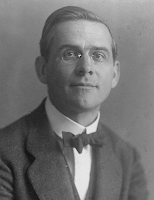
Moritz Schlick--  "The 11th Doctor  stole my look." Sometimes, when philosophers are bored, we get to describing Utopia. A little known fact about one of my philosophical faves (#NoFaves?) is that he indulged in this pass-time.  Shortly before he was murdered in 1936, Schlick had prepared a manuscript for what was to be the basis of a book on social and political philosophy. Drawing entirely from the work of  Hubert Schleichert , I'll give a quick summary of Schlick's views on the perfect society. I think it reveals a very different side of Schlick to the one philosophers are familiar with. (How on earth would you verify these propositions!?) Note that I am describing without endorsing - I'll say a bit about what I think of it at the end. It's a long post today! Schlick starts from the assertion that There is nothing in our European civilisation that causes more grief than the state. Under it we suffer most. He then tries to analyse...

Intersectional Alienation

Image
Anna Cooper - ``Liam is a fan of how generally disappointed with everyone & everything I seem to be in this photo.'' A long time ago me and some comrades -- the magnificent  Dan Malinsky and the terrific  Morgan Thompson -- got together to discuss intersectionality theory. Intersectionality theory is a set of ideas that has recently gained prominence after influential work by KimberlĂ© Crenshaw and the origins of which is often traced back to work by Anna Julia Cooper. It stresses the various ways in which the fact that we simultaneously occupy multiple demographic categories can complicate or undermine social theories that attempt to focus on the consequences of just one demographic category at the time. Examples of allegedly insufficiently intersectional approaches to studying social life are feminist theories of patriarchy, or Marxist theories of class oppression -- the charge of the intersectionality theorist is that something very important is missed out by n...